


Achieving a harmonious kitchen isn’t just about choosing the right cabinets or countertops—it’s about creating a space where every element feels intentional and balanced. Homeowners and designers alike know that a well-balanced kitchen is not only visually appealing but also more comfortable and functional for everyday use. In this article, we’ll explore practical kitchen remodeling visual balance tips to help you create a space that feels cohesive and inviting, no matter your style or budget.
Whether you’re planning a full renovation or making targeted updates, understanding the principles of visual balance can transform your kitchen into a space that looks as good as it works. For those interested in maximizing space and flow, you might also find inspiration in these open concept kitchen remodeling ideas.
Understanding Visual Balance in Kitchen Design
Visual balance refers to the way elements are arranged so that no single area overpowers another. In kitchen design, this means distributing color, texture, mass, and light in a way that feels stable and pleasing to the eye. There are two main types of balance:
- Symmetrical balance: Elements are mirrored on either side of a central axis, creating a formal, traditional look.
- Asymmetrical balance: Different elements are arranged to achieve equilibrium without exact duplication, resulting in a more dynamic, modern feel.
Both approaches can be effective, but the key is to ensure that no single feature—such as a bold backsplash or oversized island—dominates the space. Instead, aim for a sense of unity where all components work together.
Color and Contrast: Foundation of a Balanced Kitchen
Color is one of the most powerful tools for creating balance. When planning your remodel, consider how colors interact across cabinetry, walls, countertops, and flooring. A well-balanced palette typically includes a mix of light, medium, and dark tones. For example, pairing white upper cabinets with darker lower cabinets can ground the space while keeping it airy.
Contrast also plays a crucial role. Use contrasting colors or materials to highlight focal points, but keep the overall look cohesive. For instance, a bold tile backsplash can be offset by neutral countertops and cabinetry, preventing the room from feeling too busy.
Cabinetry and Appliance Placement for Visual Harmony
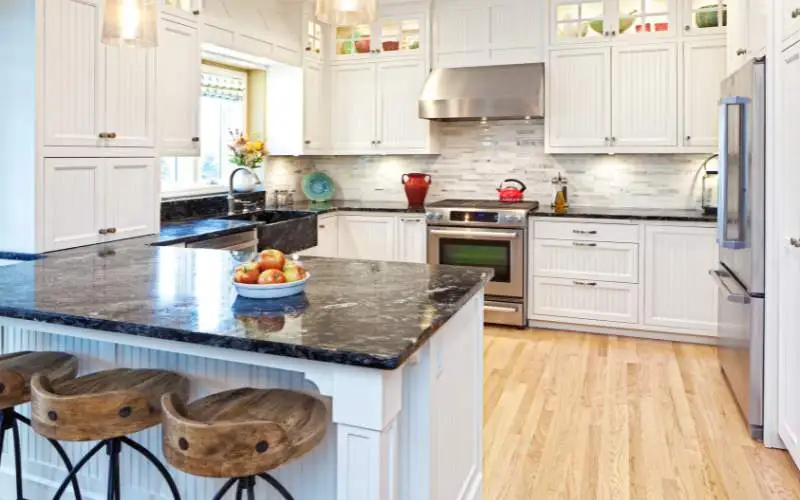
The arrangement of cabinets and appliances greatly affects the sense of balance in your kitchen. Grouping tall elements, such as refrigerators or pantry cabinets, at one end of the room can anchor the space. Meanwhile, spreading upper cabinets evenly along the walls helps maintain symmetry and avoids visual clutter.
When placing appliances, consider their visual weight. Stainless steel ovens and large range hoods can become focal points, so balance them with open shelving or decorative accents on the opposite side. This approach prevents one area from feeling too heavy or crowded.
For more ideas on how to avoid common pitfalls, check out these kitchen remodeling mistakes to avoid.
Lighting Strategies to Enhance Balance
Lighting is often overlooked, but it’s essential for both function and aesthetics. Layered lighting—including ambient, task, and accent lights—ensures that every part of the kitchen is well-lit and visually connected. Pendant lights over an island can serve as a central feature, while under-cabinet lighting brightens work areas and adds depth.
Consider using fixtures that complement your hardware and appliances for a unified look. The right lighting not only improves visibility but also highlights your kitchen’s best features, contributing to a more balanced design.
Texture, Materials, and Finishes: Creating Depth and Interest
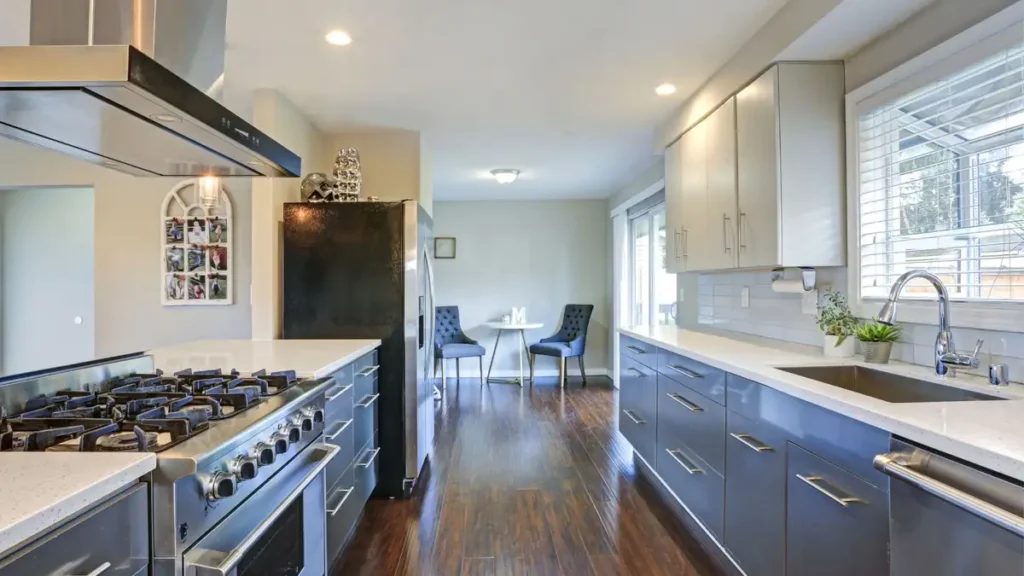
Mixing textures and finishes adds depth and prevents your kitchen from feeling flat. Combine matte and glossy surfaces, such as a polished stone countertop with matte-finish cabinets, to create visual interest. Wood accents, whether in flooring or shelving, introduce warmth and help soften harder materials like metal or glass.
Be mindful not to overdo it—choose two or three complementary materials and repeat them throughout the space for consistency. This repetition ties the design together and supports a balanced, harmonious look.
Proportion and Scale: Key Elements for a Cohesive Space
Paying attention to the size and scale of your kitchen elements is essential for balance. Oversized islands or pendant lights can overwhelm a small kitchen, while tiny hardware may get lost in a larger space. Select fixtures, furniture, and accessories that are appropriately sized for your layout.
For those working within a specific budget, you can find more practical advice in these budget kitchen remodeling ideas.
Practical Steps to Achieve Visual Balance in Your Kitchen
- Start with a focal point: Choose one standout feature, such as a statement backsplash or a unique light fixture, and design around it.
- Distribute visual weight: Balance heavy elements (like dark cabinets or large appliances) with lighter features elsewhere in the room.
- Repeat colors and materials: Use the same finishes or hues in multiple places to tie the design together.
- Layer your lighting: Combine different types of lighting to ensure every area is well-lit and visually connected.
- Edit and simplify: Remove unnecessary items and avoid overcrowding surfaces to maintain a clean, balanced look.
For a detailed step-by-step approach, consider referencing a kitchen remodeling planning checklist to keep your project organized and stress-free.
Expert Resources and Further Reading
If you’re looking for more in-depth guidance, the comprehensive kitchen remodeling guide from Ferguson Home covers everything from planning to execution, with a focus on achieving a balanced and functional space.
Understanding the average timeline for kitchen remodeling can also help you plan your project efficiently and set realistic expectations.
Frequently Asked Questions
What is the most important aspect of achieving balance in a kitchen remodel?
The most crucial factor is distributing visual weight evenly throughout the space. This includes balancing colors, materials, and the placement of large features like cabinets and appliances. A well-balanced kitchen feels stable and inviting, with no single area drawing too much attention.
How do I choose a color scheme that promotes harmony?
Start by selecting a primary color and then add complementary shades for contrast and depth. Use lighter tones to open up the space and darker accents to ground the design. Repeating colors in different areas helps unify the look and maintain balance.
Can I achieve visual balance on a budget?
Absolutely. Focus on small, impactful changes—like updating hardware, painting cabinets, or adding new lighting. Rearranging existing elements and decluttering can also make a significant difference. For more ideas, explore budget kitchen remodeling ideas tailored to affordable updates.


