When planning a new office space or renovating an existing one, choosing the right office buildout partition wall types is a crucial step. The walls you select will impact not just the look and feel of your workplace, but also its functionality, acoustics, privacy, and long-term flexibility. Understanding the main options available can help you make informed decisions that align with your business needs, budget, and future growth.
This guide covers the most common varieties of partition walls used in commercial interiors, their advantages, and important considerations for each. Whether you’re aiming for a collaborative open plan or require private offices and meeting rooms, the right wall systems can make all the difference in your buildout project’s success.

For those managing complex projects, understanding office buildout stakeholder coordination can also help ensure that wall selections align with broader project goals and timelines.
Understanding Partition Wall Systems for Modern Offices
Partition walls are non-load-bearing structures that divide interior spaces. Their main purpose is to create functional zones, provide privacy, and support the workflow of an organization. The selection of partition wall systems is influenced by factors such as layout requirements, sound insulation, aesthetics, and the need for future reconfiguration.
Let’s explore the leading partition wall types for office buildouts and what makes each one suitable for different environments.
Traditional Drywall Partitions
Drywall partitions (also known as gypsum board or stud walls) are the most widely used solution in commercial interiors. They consist of a metal or wood stud frame covered with gypsum panels, finished with paint or wall coverings.
- Advantages: Cost-effective, excellent for privacy and sound control, easy to customize for doors and windows.
- Considerations: Permanent installation, less flexibility for future changes, demolition required for reconfiguration.

Drywall is often chosen for private offices, meeting rooms, and areas where maximum acoustic separation is needed. It’s also a good fit for spaces that are unlikely to change layout frequently.
Glass Partition Walls for Office Buildouts
Glass partitions have become increasingly popular for their ability to create open, light-filled environments while still providing separation. They come in framed, frameless, and demountable systems, offering a range of styles from sleek and modern to more traditional.
- Advantages: Maximizes natural light, visually expands space, supports transparency and collaboration, many are reconfigurable.
- Considerations: Higher upfront cost, may require additional acoustic treatment, privacy can be managed with frosted or switchable glass.
Glass walls are ideal for conference rooms, collaborative areas, and executive offices where visibility and aesthetics are priorities. They also help support a modern, open-plan design philosophy.
For more on designing open-plan environments, see this comprehensive guide to open-plan office design.
Modular and Demountable Partition Systems
Modular partitions are pre-engineered wall systems designed for quick installation and easy reconfiguration. They are available in a variety of materials, including glass, metal, laminate, and fabric panels.
- Advantages: Highly flexible, minimal disruption during changes, sustainable (many components can be reused), often tax-advantaged as furniture.
- Considerations: Higher initial investment, may have different acoustic properties compared to solid walls, style options vary by manufacturer.
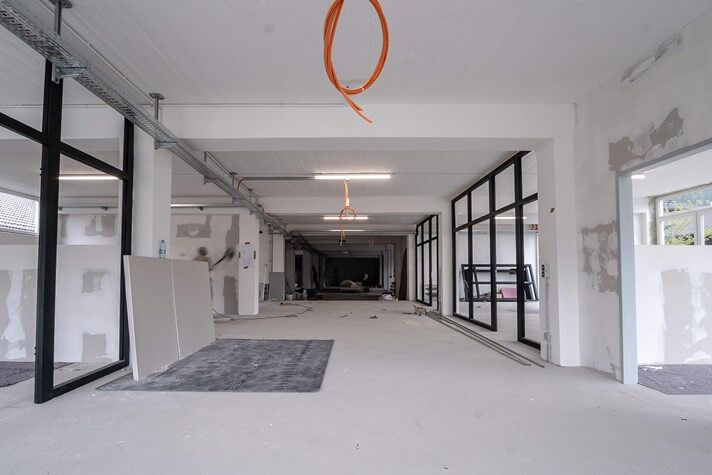
These systems are especially beneficial for companies that anticipate frequent changes in team size or workspace configuration. They support agile work environments and can be adapted as organizational needs evolve.
Specialty Partition Wall Options
Beyond the main categories, there are several specialty wall solutions designed for unique needs:
- Operable walls: Movable panels that can be folded or stacked to open up or close off spaces as needed, ideal for multi-purpose rooms.
- Acoustic partitions: Enhanced for sound absorption, suitable for call centers, recording studios, or any area where noise control is critical.
- Writable walls: Surfaces finished with whiteboard or glass for brainstorming and collaboration.
- Fire-rated partitions: Designed to meet specific building code requirements for fire separation.
Each of these options can be integrated with other wall systems to create a tailored solution for your workspace.
Key Considerations When Selecting Partition Walls
Choosing the right office buildout partition wall types involves balancing several factors:
- Acoustics: How much sound privacy is needed between spaces?
- Flexibility: Will the layout need to change in the future?
- Budget: What are the upfront and long-term costs, including maintenance and potential reconfiguration?
- Aesthetics: How do wall systems contribute to your brand and workplace culture?
- Building codes: Are there requirements for fire ratings, accessibility, or other regulations?
- Timeline: How quickly does the space need to be ready for occupancy?
It’s also wise to consider office buildout lifecycle costs and long-term maintenance when making your selection.
Integrating Partition Walls with Overall Office Design
The choice of wall systems should support your organization’s workflow, culture, and future plans. For example, a tech startup may prioritize modular glass partitions for flexibility and transparency, while a law firm might opt for solid drywall to ensure confidentiality.
Successful projects often combine several wall types to achieve the right balance of openness, privacy, and adaptability. Reviewing office buildout case study examples can provide inspiration and practical insights into what works in real-world settings.
Frequently Asked Questions
What is the most cost-effective partition wall for offices?
Traditional drywall partitions are typically the most budget-friendly option for permanent office layouts. They offer good sound insulation and privacy but are less flexible if you need to reconfigure your space in the future.
Are glass partitions soundproof?
Standard glass partitions provide some sound reduction, but they are not fully soundproof. For better acoustic performance, consider double-glazed glass, acoustic seals, or combining glass with other sound-absorbing materials.
How can I future-proof my office layout?
Modular and demountable partition systems allow for easy reconfiguration as your needs change. Investing in these flexible solutions can help you adapt your workspace without major renovations or downtime.
Do partition walls impact building codes or fire safety?
Yes, some areas require fire-rated partitions or specific accessibility features. Always consult with your contractor or architect to ensure compliance with local regulations.
Conclusion
Selecting the right office buildout partition wall types is about more than just dividing space—it’s a strategic decision that affects productivity, comfort, and long-term value. By understanding the strengths and limitations of drywall, glass, modular, and specialty partitions, you can create a workspace that supports your team and adapts to your business’s evolving needs.
For further reading on ensuring your project’s success, explore key factors in office buildout project success and long-term maintenance considerations to maximize your investment.